Moorpark’s hard water and your tile and grout
Moorpark’s tap water is hard. Ventura County Waterworks District No. 1 delivered about 86% State Water Project water and 14% from its four Las Posas Basin wells, in 2025; the imported water averaged 8.3 grains per gallon, about 142 mg/L, and the wells 12.9, about 221 mg/L. Those minerals are what leave the white film on shower tile and grout here.
Published , updated . About 4 minutes to read. Written by Moorpark Carpet Cleaners, reviewed by Chris Szetela, founder of Maid VIP.
Maid VIP’s own estimate: about $0.50–$3 per square foot. Services fulfilled by our affiliated service partner, Maid VIP. Neighborhoods: Downtown and High Street, Mountain Meadows, Peach Hill and Carlsberg, Moorpark Highlands, Campus Park, Northwest Moorpark. Call (805) 552-5198
Is Moorpark water hard?
Moorpark’s water is hard. The U.S. Geological Survey calls water hard at 121 to 180 mg/L and very hard above 180, measured as calcium carbonate. Ventura County Waterworks District No. 1 reports hardness in grains per gallon, and its 2025 report gives these figures for the tap water’s two sources:
| Source | Share of 2025 supply | Grains per gallon | mg/L | USGS scale |
|---|---|---|---|---|
| Imported State Water Project water | About 86% | 8.3 average (8.0–9.9) | About 142 (137–169) | Hard |
| District wells, Las Posas Basin | About 14% | 12.9 average (11–14) | About 221 (188–240) | Very hard |
Blended in those proportions, the water averages roughly 150 mg/L: hard. One grain per gallon is 17.12 mg/L.

Where Moorpark’s water comes from
Most of it travels a long way. The District buys imported State Water Project water through the Calleguas Municipal Water District, treated at the Metropolitan Water District of Southern California’s Jensen plant in Granada Hills, and in 2025 that was about 86% of the supply. The rest, about 14%, came from four District wells in the Las Posas Basin. The same report puts total dissolved solids at 430 parts per million in the well water and 304 in the imported water, in 2025.
The Moorpark Desalter: planned, not built
A desalter would treat the brackish local groundwater and take minerals out. Ventura LAFCo’s 2022 review of the District expected a Moorpark Desalter of about 5,000 acre-feet a year to be operating by 2030, at a cost of around $50 million. In January 2025, though, the District’s Citizens’ Advisory Committee heard that the project needs 3,000 to 4,000 acre-feet of groundwater that the District has no allocation for. Until that changes, the water stays hard.
Hard water deposits on tile, and what grout absorbs
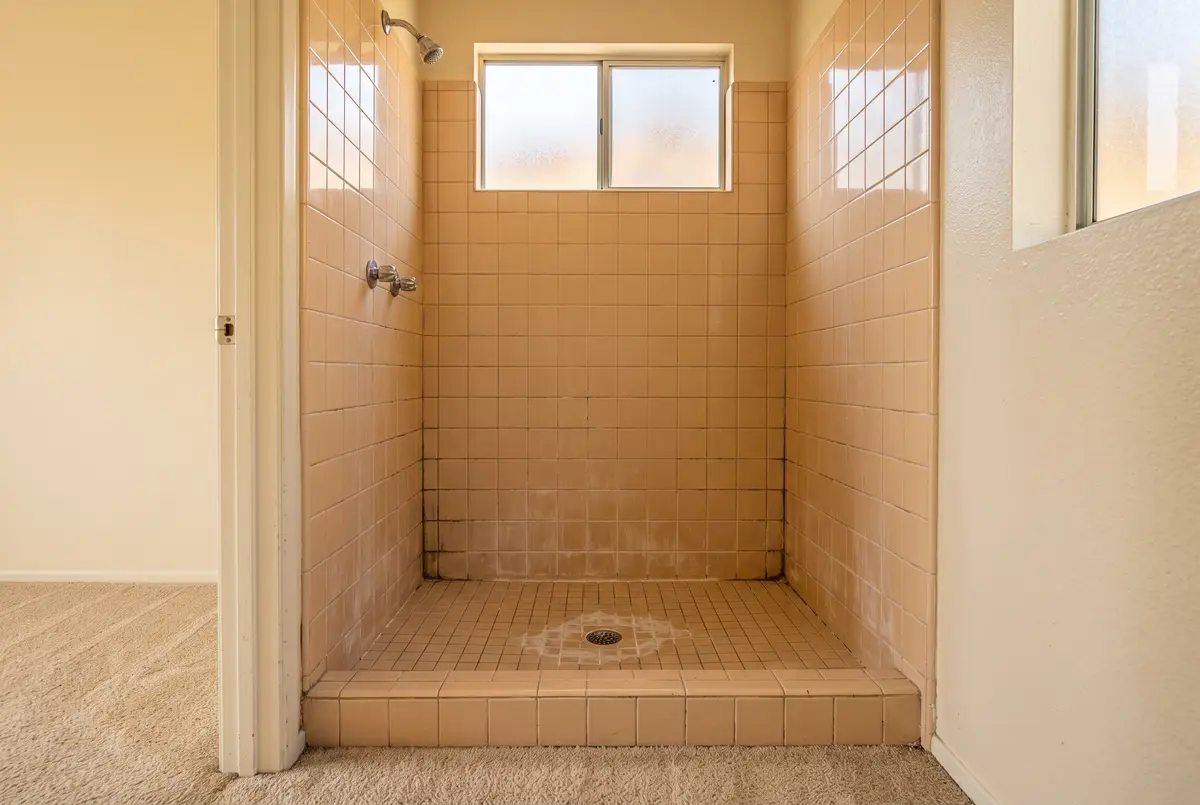
When hard water dries on a shower wall, the calcium and magnesium stay behind as a white film on the glaze, thickest on the lower rows and around the drain. Grout behaves differently: it is porous and sits a little below the tile, so it soaks up soil and minerals and darkens. A mop or a sponge pushes more dirt into the joints than it lifts out, which is why grout lines go gray while the tile still wipes clean.

Tile and grout cleaning cost per square foot
HomeAdvisor’s national figure is $0.50–$3 per square foot. Some companies price by the room instead, at $300–$500 for a room of 150 to 250 square feet; others add a $100–$200 call-out minimum. Fixr’s figure for cleaning and sealing together is $1.50–$2.50 per square foot. For a 60-square-foot bathroom floor, the per-foot rate alone comes to $30 to $180, so a call-out minimum can set the price of a small job.
Typical national cost range, not a quote: the cleaning company prices your home before any work.
The carpet prices guide sets the tile and grout estimate of Maid VIP, which shares owners with this site, beside its carpet prices.
Grout sealing and color sealing
Sealing slows what soaks into cement grout; it doesn’t stop film forming on the tile. On Fixr’s figures, a standard grout sealant comes to $0.90–$1.73 per square foot. Color sealing, which tints and seals the grout in one step, runs $1–$2.50 per square foot on HomeAdvisor’s figures, and evens out grout that has darkened unevenly. Sealer goes on clean, dry grout, so the cleaning comes first.
Natural stone and travertine cleaning
Travertine, marble and limestone are calcium-based, so the acidic cleaners that cut mineral film on ceramic tile etch them, leaving dull spots. Stone gets a pH-neutral, stone-safe cleaner and its own price, and a stone shower in hard water benefits from drying after each use more than from any product. Slate and granite are tougher, but the cleaner should still know what the stone is before starting.
Keeping the film down between cleanings
- Squeegee or towel-dry the shower walls after each use
- Run the bathroom fan during the shower and for a while after
- Wipe the grout lines nearest the drain once a week
- Use a cleaner made for the surface: mild for ceramic and porcelain, stone-safe for stone
Sources
Prices here come from the price guides below, read in October 2026: HomeAdvisor’s Moorpark page where it is named, national figures everywhere else, and none of them a quote. Facts about Moorpark come from the local sources listed.
- Ventura County Waterworks District No. 1, 2025 water quality report (published June 2026)
- Ventura LAFCo, Waterworks District No. 1 Municipal Service Review (May 18, 2022)
- Waterworks District No. 1 Citizens’ Advisory Committee, approved minutes (January 9, 2025)
- U.S. Geological Survey, Hardness of Water
- HomeAdvisor, tile and grout cleaning cost (updated June 19, 2026)
- Fixr, tile and grout cleaning cost